
Advanced Retinal Imaging in Houston: How early OCT Scans Detect Glaucoma and Macular Degeneration Before Sight Loss
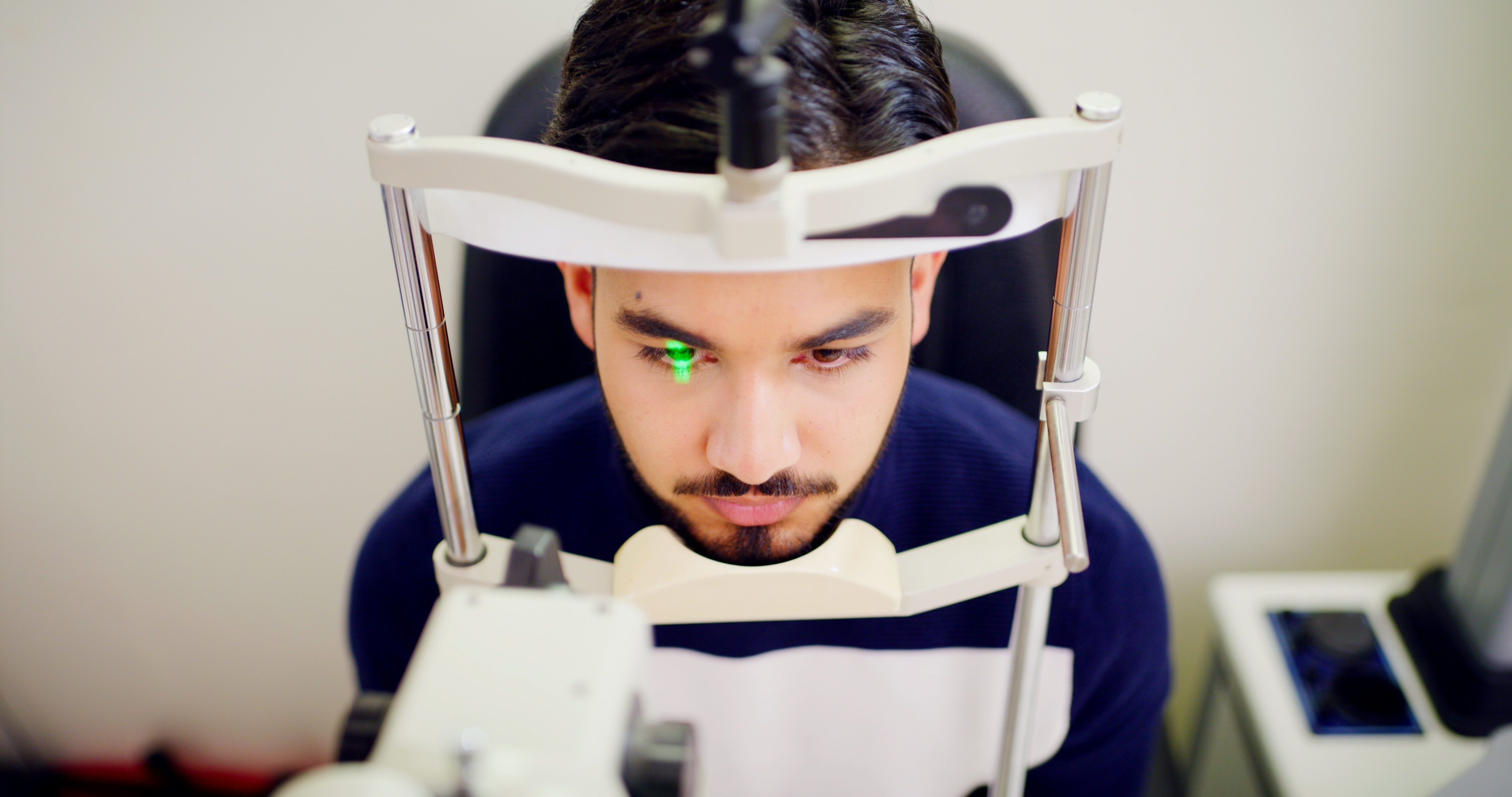
Many eye diseases can begin changing the structures inside your eyes before you notice blurry vision or other obvious symptoms. That is why modern eye exams often involve more than reading letters from an eye chart. Advanced retinal imaging can give us a detailed look at structures that play an important role in long-term vision.
At Vision Source Mission Bend in Houston, we offer Optical Coherence Tomography, or OCT, to help evaluate and monitor conditions such as glaucoma and macular degeneration.
What Is an OCT Scan?
OCT is a non-invasive imaging test that uses light waves to create detailed cross-sectional images of the retina. These images allow us to examine individual retinal layers and measure subtle structural changes that cannot be evaluated through a standard vision test alone.
The scan is quick and does not involve anything touching the eye. In some situations, dilation may also be recommended to provide a more complete assessment of the retina.
OCT images can be stored in your record so future scans can be compared with earlier results. This makes the technology especially useful for monitoring conditions that may gradually change over time.
How Does OCT Help Detect Glaucoma?
Glaucoma damages the optic nerve and can gradually affect peripheral vision. One of the challenges with glaucoma is that the most common forms may progress without obvious early symptoms.
OCT can measure structures around the optic nerve, including the retinal nerve fiber layer. Thinning in these areas may provide important information when glaucoma is suspected or already being monitored.
A glaucoma evaluation may include:
OCT imaging of the optic nerve and retinal nerve fiber layers
Eye pressure measurements
Visual field testing to evaluate peripheral vision
Examination of the optic nerve
Repeat testing to identify changes over time
OCT is an important tool, but it is not used by itself to diagnose glaucoma. We consider multiple test results, risk factors, and examination findings together.
How Can OCT Help With Macular Degeneration?
Age-related macular degeneration, or AMD, affects the macula, which provides the detailed central vision needed for reading, recognizing faces, and seeing fine details.
Early AMD may develop before a patient notices significant changes in everyday vision. OCT allows us to examine the layers of the macula in detail and look for structural changes associated with the condition.
For patients with wet AMD, OCT can also help identify fluid within or beneath the retina. Detecting these changes promptly can help determine whether referral for retinal treatment is needed.
For dry AMD, repeat scans may help document changes in the macular structure and support ongoing monitoring.
Can OCT Detect Eye Disease Before Vision Loss?
OCT can reveal certain structural changes before a patient becomes aware of symptoms, which is one reason regular eye exams are valuable. However, no single test can identify every eye disease or predict exactly how a condition will progress.
At our Houston practice, OCT is used as part of a broader examination. Depending on your age, family history, medical conditions, and examination findings, we may also recommend retinal imaging, dilation, visual field testing, or other diagnostic procedures.
Having baseline images can be particularly useful because we can compare future scans and determine whether structures remain stable or are changing.
Who Should Consider Advanced Retinal Imaging?
Patients with a family history of glaucoma or macular degeneration, elevated eye pressure, diabetes, suspicious optic nerve findings, or existing retinal disease may benefit from closer monitoring. Age can also increase the risk of several eye conditions.
Do not wait for routine monitoring if you develop sudden vision loss, new flashes, a rapid increase in floaters, or a curtain-like shadow across your vision. These symptoms require urgent evaluation.
If you want a more detailed look at your eye health or need monitoring for glaucoma or macular degeneration, contact Vision Source Mission Bend at 13615 Bellaire Blvd, Houston, TX 77083 by calling (281) 933-3446 to schedule a comprehensive eye exam and learn whether OCT imaging is appropriate for you.
Quick Links
Helpful Articles
All Eye Care Services
Find personalized eye care excellence with our comprehensive services. From eye exams to advanced diagnostics, trust us for all your vision needs.

Keep In Touch
For non-urgent questions or to learn more about our services, contact us today!
© 2026 Vision Source Mission Bend. All rights Reserved - Accessibility Statement - Privacy Policy - Sitemap
Managed and Designed by 